Welcome back to the InsideSync Blog – our little corner to share, learn, and grow without judgement.
Today, let’s unpack why most resolutions start to slip in the first 21 days, and how to build habits that last well beyond January..
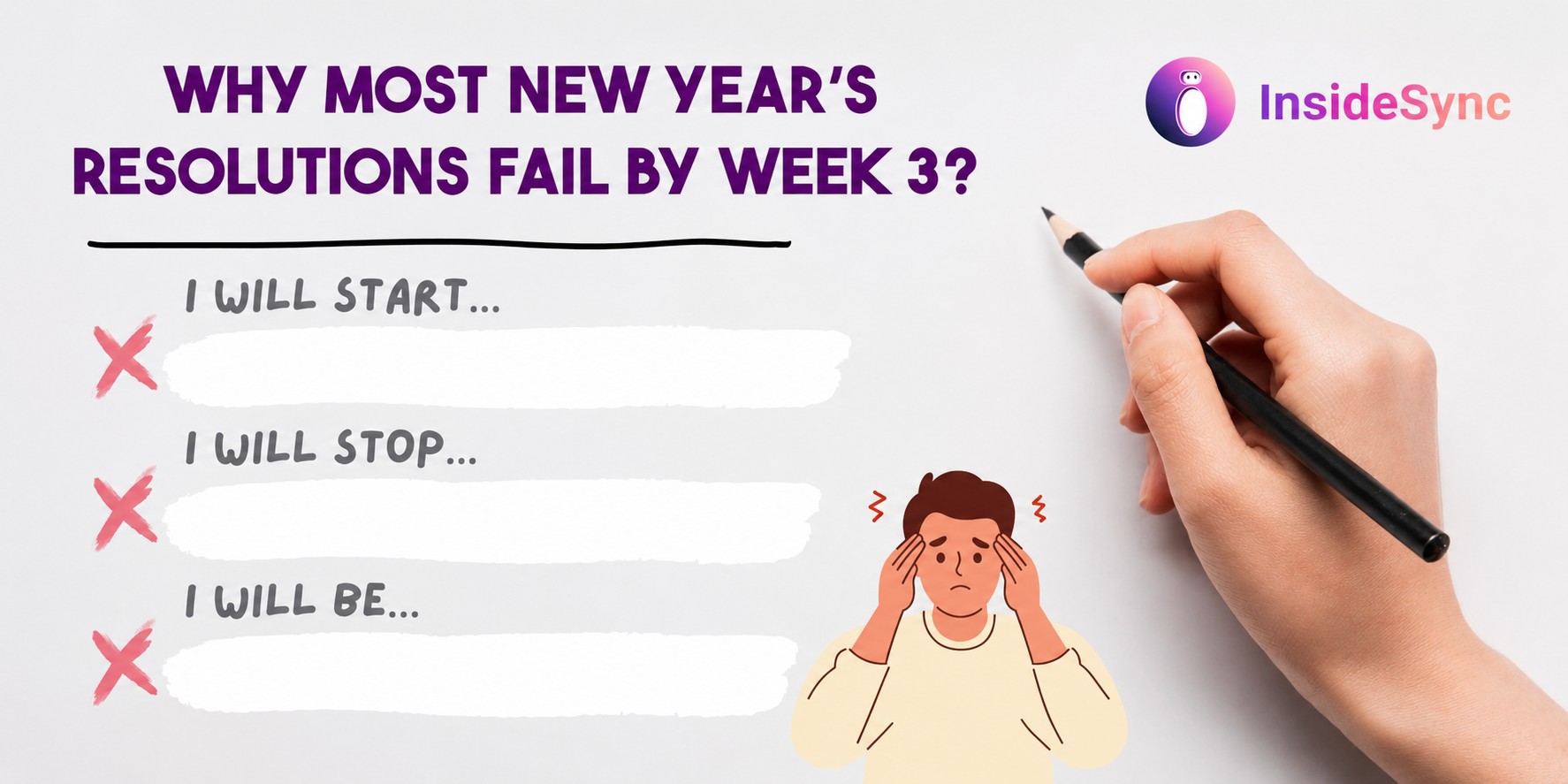
Every year starts the same way.
✨ We feel hopeful.
🗓️ We set goals.
💪 We promise ourselves this time will be different.
Then… somewhere around week three, things start slipping.
Not because we don’t care.
Not because we’re lazy.
But because real life returns – work gets busy, energy drops, routines break, and suddenly the resolution becomes “something I’ll restart next week”.
If that sounds familiar, you’re not alone.
🔄 The truth about “21 days to build a habit”
You’ve probably heard: “It takes 21 days to form a habit.”
It’s simple and catchy… but it’s not universally true.
📚 Research from University College London found that it takes an average of 66 days for a new behaviour to become automatic (and for some people, it can take much longer).
Hence, If your goal still feels hard after three weeks, that’s normal. You haven’t failed – you’re still early.
💭 Why New Year’s resolutions fall apart
🧐 The goal is too vague
Many resolutions start like:
“I want to get healthier”
“I want to be more productive”
“I want to be more organised”
Good intentions – but not clear enough for your brain to act on.
Goal-setting research shows specific goals tend to be more effective than vague ones.
Because your brain can’t execute “be better” – it needs a clear next step.
Try this shift:
“Get healthy” → 🚶♀️ Walk 20 minutes after work
“Be productive” → ✅ Plan my top 3 priorities each morning
“Be organised” → 🧹 5-minute tidy at the end of the day
⚡️ We rely too much on motivation
Motivation is amazing in early January.
But it’s not stable – it changes with sleep, stress, workload, and life.
Research on self-control suggests willpower is limited, especially when we rely on it constantly.
That’s why resolutions often feel easy on January 1… and weirdly impossible by January 10.
✅ The fix: Build systems, not just intentions.
Systems look like:
🗓️ consistent scheduling
🔔 reminders
🔁 routines
🌱 environmental cues (making it easier to start)
🧱 We try to change too much at once
New Year’s goals often come in bundles:
Wake up early. Exercise daily. Eat clean. Read more. Stop scrolling. Meditate. Learn a language. Drink 2.5 litres of water.
None of these are bad goals – it’s just… a lot.
Behaviour change studies suggest taking on many changes at once can lower success rates because each new habit competes for time and energy.
✅ Better approach: Pick one habit first. Stabilise it. Then add the next.
💪 What actually works (and why)
🎯 Make the goal small enough to be consistent
Instead of: “Work out every day”
Try:💡 “10 minutes of movement at 6pm on weekdays.”
Not because 10 minutes is the end goal – but because consistency is what builds the habit.
🔗 Link the habit to something you already do
One of the most effective strategies is anchoring a new habit to an existing routine.
Research on implementation intentions shows linking behaviour to a clear cue improves follow-through.
Examples:
🪥 After brushing teeth → stretch for 2 minutes
🍽️ After lunch → walk for 10 minutes
☕ After morning coffee → open InsideSync and plan the day
The habit becomes part of your day – not something you have to remember.
✅ Track consistency, not perfection
Many people quit after missing one day. But missing one day isn’t failure – it’s life.
A simple rule that helps:
📌 Don’t miss twice.
Get back on track the next day, without guilt or drama.
Habit research supports the idea that consistency matters more than intensity.
🌿 Make your environment work for you
Your environment shapes your behaviour more than you think.
Research (including studies in Health Psychology) highlights that reducing friction, like preparing in advance, makes follow-through easier.
Try:
👟 Put workout clothes where you’ll see them
📵 Keep distractions out of reach during focus time
🧺 Make the “good choice” the easy choice
This isn’t about being stronger – it’s about making it easier to start.
📈 Use feedback loops to stay engaged
Tracking helps because it creates feedback – and feedback keeps you engaged.
This can be simple:
✅ a daily tick
🔥 a streak
🗓️ a calendar view
📝 a weekly check-in
Over time, it reinforces a feedback loop: action → progress → reinforcement.
📲 How InsideSync helps with New Year’s resolutions
InsideSync isn’t about becoming a “perfect” version of yourself overnight.
It’s about support – especially on the days you’re busy, tired, or not feeling motivated.
InsideSync helps you:
🗓️ turn vague goals into scheduled actions (so they actually happen)
🔔 set reminders that bring you back gently when life gets busy
🧩 plan around your real calendar, not an unrealistic routine
✅ track consistency over time, without judgement
🔁 stay on track without “starting over” every time you miss a day
Because the goal isn’t perfection. It’s progress you can maintain.
If your resolutions haven’t gone perfectly so far, that’s okay.
You’re not behind. You’re human.
This year, build habits that can survive a normal week – not just an ideal one.
And if you want a calm, judgement-free way to stay on track, InsideSync is here for you.